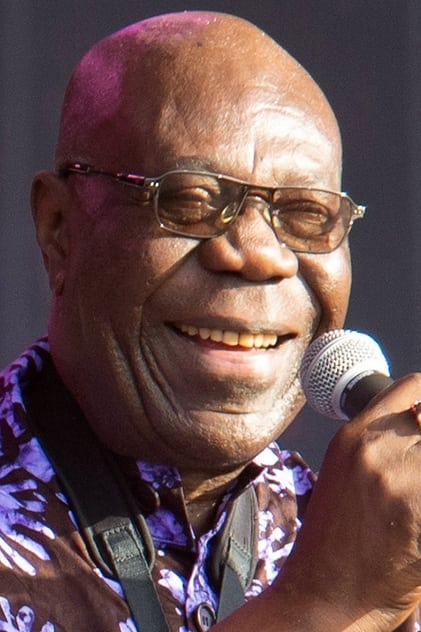
Manu Dibango
Personal information
- Known for
- Звук
- Known credits
- 32
- Gender
- Мужской
- Born
- 12 декабря 1933 г.
- Died
- 24 марта 2020 г.
- Place of birth
- Douala, Cameroon
- Also known as
- Emmanuel N'Djoké Manu Dibango
Biography
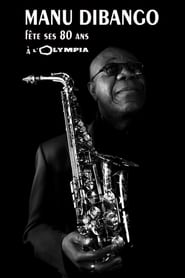
Emmanuel N'Djoké "Manu" Dibango (12 December 1933 – 24 March 2020) was a Cameroonian musician and songwriter who played saxophone and vibraphone. He developed a musical style fusing jazz, funk, and traditional Cameroonian music. His father was a member of the Yabassi ethnic group, while his mother was a Duala. He was best known for his 1972 single "Soul Makossa". He died from COVID-19 on 24 March 2020.
Emmanuel "Manu" Dibango was born in Douala, Cameroon in 1933. His father, Michel Manfred N'Djoké Dibango, was a civil servant. Son of a farmer, he met his wife travelling by pirogue to her residence, Douala. Emmanuel's mother was a fashion designer, running her own small business. Both her ethnic group, the Douala, and his, the Yabassi, viewed this union of different ethnic groups with some disdain. Dibango had only a stepbrother from his father's previous marriage, who was four years older than him. In Cameroon, one's ethnicity is dictated by one's father, though Dibango wrote in his autobiography, Three Kilos of Coffee, that he had "never been able to identify completely with either of [his] parents".
Dibango's uncle was the leader of his extended family. Upon his death, Dibango's father refused to take over, as he never fully initiated his son into the Yabassi's customs. Throughout his childhood, Dibango slowly forgot the Yabassi language in favour of the Douala. However, his family did live in the Yabassi encampment on the Yabassi plateau, close to the Wouri River in central Douala. While a child, Dibango attended Protestant church every night for religious education, or nkouaida. He enjoyed studying music there, and reportedly was a fast learner.
In 1941, after being educated at his village school, Dibango was accepted into a colonial school, near his home, where he learned French. He admired the teacher, whom he described as "an extraordinary draftsman and painter". In 1944, French president Charles de Gaulle chose this school to perform the welcoming ceremonies upon his arrival in Cameroon.
In 1949, at age 15, Dibango was sent to college in Saint-Calais, France. After that he attended the lycée de Chartres where he learned the piano.
He was a member of the seminal Congolese rumba group African Jazz and has collaborated with many other musicians, including Fania All Stars, Fela Kuti, Herbie Hancock, Bill Laswell, Bernie Worrell, Ladysmith Black Mambazo, King Sunny Adé, Don Cherry, and Sly and Robbie. He achieved a considerable following in the UK with a disco hit called "Big Blow", originally released in 1976 and re-mixed as a 12″ single in 1978 on Island Records. In 1998, he recorded the album CubAfrica with Cuban artist Eliades Ochoa. At the 16th Annual Grammy Awards in 1974, he was nominated in the categories Best R&B Instrumental Performance and Best Instrumental Composition for "Soul Makossa".
The lyrics of the song "Soul Makossa" on the record of the same name contain the word "makossa", which refers to a style of Cameroonian urban music and means "(I) dance" in Dibango's native tongue, the Cameroonian language Duala. The song has influenced popular music hits, including Kool and the Gang's "Jungle Boogie". Source: Article "Manu Dibango" from Wikipedia in English, licensed under CC-BY-SA 3.0.
This biography is only available in English.
Popular

Filmography
Звук
13 titles



Актёрская работа
19 titles
2017


1997